NCTS Communique: Change to the Modelling of Medicinal Cannabis Products in the AMT
Apr 16, 2026
Following updates to the Australian Medicines Terminology (AMT) Editorial and Naming Rules, the modelling of medicinal cannabis will be revised, which may result in changes to concept descriptions, and the depiction of active ingredients and strength representation within the terminology.
Who will be impacted and what do I need to know?
The primary audience for this communique is software vendors and implementers.
The updated AMT Editorial and Naming Rules will not model active ingredients where the strength is represented as an inequality and will consider the definition of an active ingredient for medicinal cannabis based on the Therapeutic Goods (Standard for Medicinal Cannabis) Order 2017 (TGO 93). Depending on vendor implementation of this update, clinical end users may experience changes to the display of medicinal cannabis products during medicine selection.
The TGO 93 defines an active ingredient as follows:
- Tetrahydrocannabinol (THC), including corresponding acids in quantities equal to or greater than 1% w/w or w/v of the product.
- Cannabidiol (CBD) and any other cannabinoids, including corresponding acids, equal to or greater than 2% w/w or w/v of the product.
As such, cannabinoid substances expressed as inequalities that are at or below the TGO 93 threshold will no longer be modelled. Additionally, cannabinoid substances with strengths represented as inequalities above the TGO 93 threshold will not be eligible for inclusion in the AMT.
Table 1 displays examples of changes to modelling and AMT eligibility based on the updated AMT Editorial and Naming Rules.
Table 1: Example of changes to Medicinal Cannabis modelling
| Strength represented as: | Current Modelling of Containerised Branded Clinical Drug Package | Future Modelling of Containerised Branded Clinical Drug Package |
| An inequality at or below TGO93 thresholds | Inequality is modelled Example: Urbanleaf mCart THC Day (cannabidiol less than 2 mg / 0.5 g + delta-9-tetrahydrocannabinol 400 mg / 0.5 g) inhalation, 1 x 0.5 g cartridge (containerised branded clinical drug package) (containerised branded clinical drug package) (Figure 1) | Inequality is NOT modelled Example: Urbanleaf mCart THC Day (delta-9-tetrahydrocannabinol 400 mg / 0.5 g) inhalation, 1 x 0.5 g cartridge (containerised branded clinical drug package) (Figure 2) |
| An inequality above TGO93 thresholds | Currently in AMT for already released content. Modelling for existing AMT concepts will not change. | Prospective only for new content request submissions New medicinal cannabis concepts with an inequality above TGO93 thresholds will NOT be eligible to be modelled using the updated approach. Existing concepts will NOT change Example: Urbanleaf mCart THC Night (cannabidiol less than 40 mg / 1 g + delta-9-tetrahydrocannabinol 800 mg / 1 g) inhalation, 1 x 1 g cartridge (containerised branded clinical drug package) |
| A concrete value (i.e. the strength is NOT an inequality) | Concrete values are modelled Example: Grandiosa Kosher Kush (cannabigerol 14.2 mg / 1 g + delta-9-tetrahydrocannabinol 220 mg / 1 g) bud, 10 g, jar (containerised branded clinical drug package) | No change to modelling Example: Grandiosa Kosher Kush (cannabigerol 14.2 mg / 1 g + delta-9-tetrahydrocannabinol 220 mg / 1 g) bud, 10 g, jar (containerised branded clinical drug package) |
As a result of the update to the AMT model, some medicinal cannabis legacy content in the AMT will not be amended to fit the model and will thus remain unchanged.
Following vendor implementation of AMTv4, the primary clinical risk is the potential for incorrect selection of medicinal cannabis products which may occur due to:
- Values used to identify a product may no longer be visible to the healthcare provider, making it harder to distinguish between products
- Inconsistencies between the onscreen display of the product and sponsor product detail
- Products that previously looked different may now appear more similar on screen.
Overall, the incorrect selection of medicinal products can lead to a supply of an inappropriate cannabis formulation to a consumer. The incorrect formulation may be an omission of a required cannabinoid resulting in sub-therapeutic treatment while an unintended increase or addition of a cannabinoid substance may lead to unmonitored adverse effects. Errors involving THC pose greater clinical consequences due to its psychoactive properties
What do I need to do?
Software vendors and implementers must consider how changes to AMT Editorial and Naming Rules will impact the clinical users of their systems. To mitigate the risk of selection errors, we strongly recommend software vendors and implementers:
- Confirm the impact of updated AMT modelling on medicinal cannabis product displays into your systems
- Communicate confirmed changes to the display of medicinal cannabis on your software to clinical end users
- Validate display logic and mapping rules
- Conduct regression testing across relevant workflows to ensure updates do not break existing functionalities
- Provide guidance/training to end users
- Implement monitoring and feedback channels.
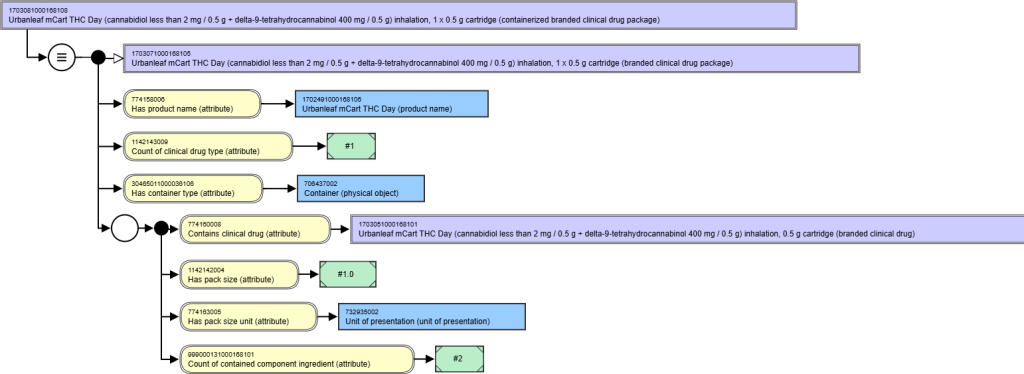
Figure 1: Current containerised braded clinical drug package modelling for a vape product.
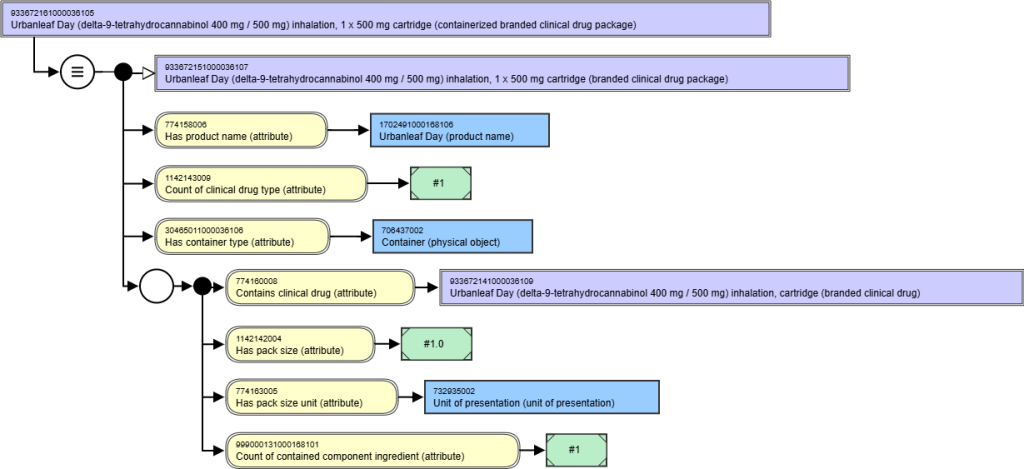
Figure 2: Future modelling for the vape product.
If you require further information, please contact help@digitalhealth.gov.au